Tattoo-Associated Uveitis (TAU)
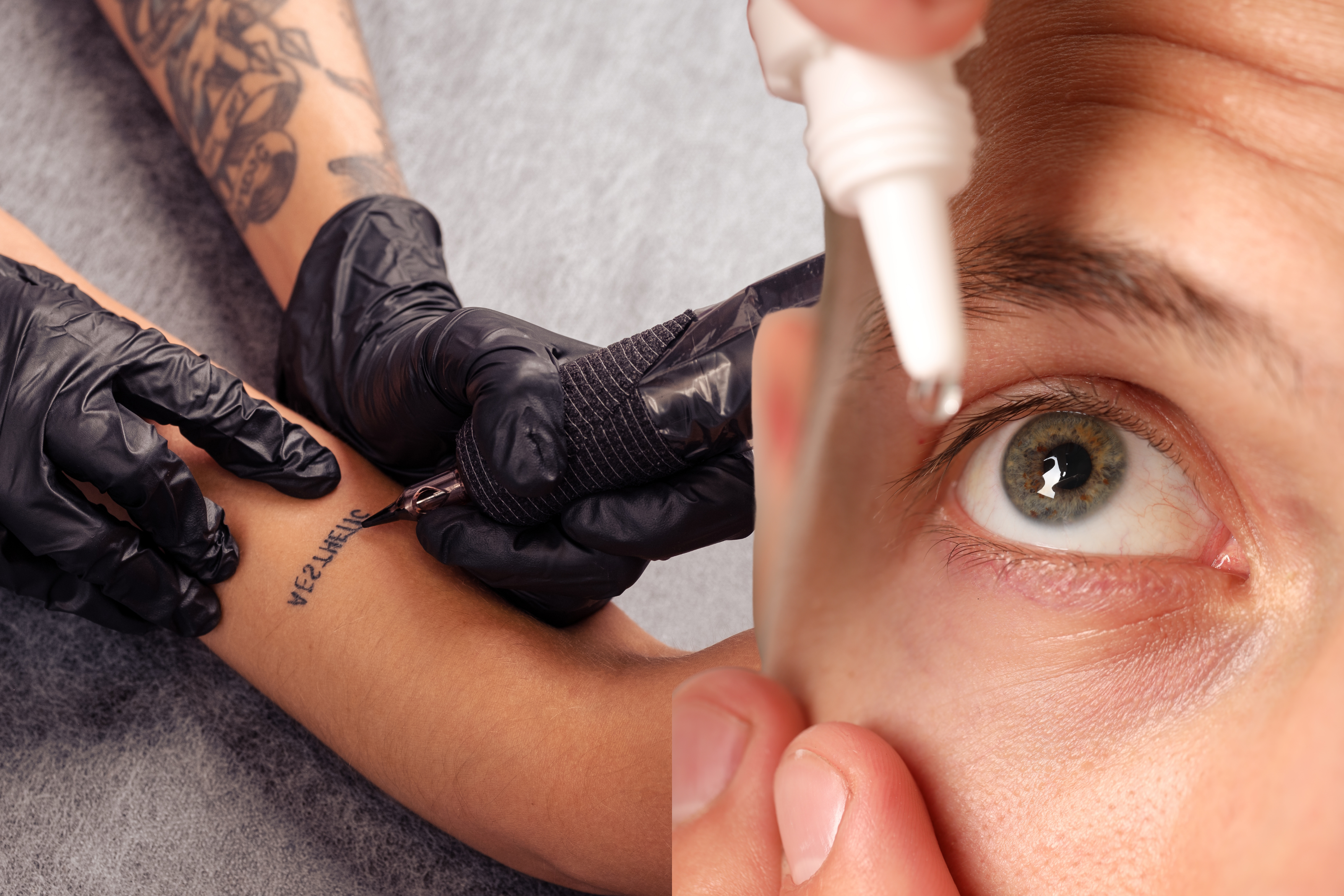
Can Tattoos Affect Your Eye Health?
Tattoos have become increasingly popular worldwide. However, while tattoos are often seen as a form of self-expression, they can sometimes lead to unexpected medical complications. One such condition is Tattoo-Associated Uveitis (TAU) — a rare but important inflammatory eye condition linked to tattoo ink.
Understanding this condition can help individuals recognize symptoms early and seek timely medical care.
What Is Tattoo-Associated Uveitis?
Tattoo-Associated Uveitis (TAU) is an inflammatory reaction in the eye that may occur after getting a tattoo. It is believed to result from an immune system response triggered by tattoo pigments.
In this condition, the body reacts to certain components of tattoo ink, which can lead to inflammation inside the eye (uveitis). Surprisingly, this reaction may not occur immediately and can appear months or even years after tattooing.
Why Tattoos Can Trigger Eye Inflammation
Although tattoos are common, they carry certain health risks. These include:
- Infection due to unsterilized needles
- Allergic reactions to tattoo pigments
- Immune system reactions to ink ingredients
Tattoo ink formulations vary widely, and many ingredients are not strictly regulated. In the United States, tattoo inks are not fully regulated by the U.S. Food and Drug Administration (FDA) for long-term safety, and different chemical compounds may be used in various formulations.
Some pigments can act as antigens, meaning they stimulate the immune system and trigger inflammatory reactions in susceptible individuals.
How Tattoo Pigments Affect the Eyes
Certain tattoo pigments may lead to granulomatous inflammation, a type of immune response in which clusters of inflammatory cells form.
This reaction may affect both the skin and the eyes, leading to:
- Granulomatous changes in tattooed skin
- Bilateral anterior uveitis (inflammation affecting both eyes)
- Persistent eye irritation and inflammation
In some cases, the immune reaction triggered by tattoo pigments can also be associated with sarcoidosis, a systemic inflammatory disease.
Common Symptoms of Tattoo-Associated Uveitis
Symptoms can vary in severity but often include:
- Eye redness
- Eye pain or discomfort
- Blurred vision
- Light sensitivity (photophobia)
- Excessive tearing
- Floaters in vision
Because these symptoms may develop long after getting a tattoo, many patients may not initially associate them with their tattoo.
When Does Tattoo-Associated Uveitis Occur?
The onset of TAU is usually delayed.
In many cases, uveitis develops at least 6 months after tattooing, though it can appear several years later. This delayed response is why the connection between tattoos and eye inflammation may sometimes be overlooked.
Relationship Between Tattoo-Associated Uveitis and Sarcoidosis
Research suggests that tattoo ink may act as a trigger for granuloma formation, especially in individuals who are predisposed to inflammatory conditions such as sarcoidosis.
TAU may occur in two forms:
1. Associated with systemic sarcoidosis
2. As a delayed hypersensitivity reaction to tattoo pigments
Because of this possible connection, patients with tattoo-associated uveitis may sometimes undergo further evaluation to rule out systemic inflammatory diseases.
When to See an Eye Specialist
If you have tattoos and experience symptoms such as persistent eye redness, pain, or blurred vision, it is important to consult an ophthalmologist promptly.
Early diagnosis and treatment can help prevent complications and protect long-term vision.